
We’re working with a Customer Leading Mindset

Did you see what we did there…?

A bit of a play on ‘CLM’. We’re not just about the Legal Management of your Connections, we work with our customers front of mind across everything we do.

In Laura Wilson’s Director’s Statement for the year ahead she described our customers as being ‘our world’. And they are. You are. So much so that over the next quarter we’re going to be focussing on why and how we work with a Customer Leading Mindset at CLM.

We’ve got lots of activities planned which you’ll hear about shortly, but in case you were wondering what we’re already doing on the ‘Customer Leading Mindset’ front, here’s a quick summary:

Our new website

Relaunched last year with navigation tailored to helping our customers find the information they need:

  • It features a dedicated ‘our services’ page, which explains how different aspects of our work can be tailored to individual customer requirements
  • We’ve broken down our customer journey into eight simple steps, so you know what to expect through the course of a project
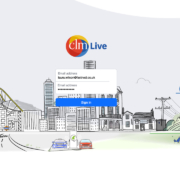
  • And of course our new customer platform, CLM Live can be accessed directly through the site.

CLM Live

We launched this last year as an information hub and to provide live updates on all projects for our customers. Since launching:

  • Productivity levels have increased for both our team and our customers
  • Visibility of information is improved for all parties
  • Jobs are being delivered more efficiently and with absolute clarity on timeline

Communication

Our #CommunicatingLandrightsMatters campaign ran last year, focussing on the who, why, where and when of keeping stakeholders informed. Proactive communication remains one of our stand-out credentials at CLM and it goes without saying, that starts with our customers.

So, with much more to come on this subject, join us for the journey and if you want a landrights service provider which is truly focussed on putting its customers first, drop us a line.

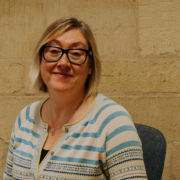
Q&A with Aileen Paterson, Landrights Manager

Aileen Paterson is one of CLM’s most experienced and capable managers. Our clients appreciate her knowledge of the landrights sector and many of our junior team members enjoy her mentorship.

How did your career start out?

“I worked for solicitors from age 17, so that was straight from school. I worked in various firms gaining knowledge and experience in different areas of law and I found the work interesting. With each area of law I took the opportunity to work to my way up to become a paralegal, successfully gaining certification in various areas, including Conveyancing and Debt Recovery.

“I then joined Scottish Power where I worked closely with one of its in-house solicitors to set up a department for debt recovery.  It was a niche area at the time as Scottish Power had never really taken the legal route before to recover outstanding bills. As part of that role, I had responsibility for training and leading teams – something which I still very much enjoy.”

You were immersed in the energy sector from quite early on in your career then. Where would you say you developed your knowledge of the landrights sector in particular?

“That really developed for me when I was at Energetics. I was there for 13 years and with my prior knowledge of the legal sector and understanding of landrights, my focus was on establishing an in-house service to replace the existing outsourced provision. I developed the processes and team and continued to develop the department until I left to join CLM.”

When did you join CLM?

“During my time at Energetics, the Company rebranded as Last Mile and acquired UKPS. And as part of the Last Mile Group, UKPS was already working with CLM so that’s where the introduction took place. CLM’s team dealt with the English work and my team and I dealt with Scottish contracts.  I worked in conjunction with Laura and her team for a couple of years before I was tempted across and given the opportunity to apply my knowledge to help develop CLM’s offering.”

What have your key responsibilities been since you joined CLM?

“I have a keen eye for a good process! Businesses can’t grow properly without the right systems in place, so I’ve spent a fair amount of time looking at areas for improvement and bringing about consistency.”

That sounds like a sensible plan, what impact has it had on the team?

“A really good one from what I can see. Team members can now confidently pick up enquiries and jobs which they might not necessarily have any knowledge of, but because clear systems are now in place, they can manage enquiries for different clients which has made for more efficient working all round.”

Looking to the wider industry, how do you think the landscape is changing for CLM?

“I think there’s a shift in the nature of the work we’re receiving. It’s becoming more varied which means continued development for our team members and an increase in the services we can offer, which is great for the Company.  ICPs are evolving how they operate and have different expectations for what CLM could deliver. It’s a good change though and shows how ICPs are understanding more about the value we can bring.”

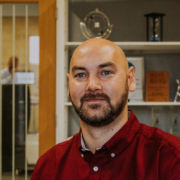
An interview with Mike Beckwith, Lead project coordinator

Mike Beckwith has been with CLM for seven years, joining the Company when it was a third of the size it is now. He’s grown with the business, both in terms of his knowledge and how he’s helping it develop.

Where are you from originally (trying to place your accent!)?

“The Wirral, yeah my accent has stayed with me. I grew up there but moved to Peterborough in my early 20s and worked for Jaggards Solicitors. I was a fee earning staff member and started to get a taste of life in the legal profession.”

What brought you to CLM then?

“My colleague Chris Neville. Both Chris and I worked for Jaggards Solicitors prior to CLM. Chris left Jaggards to start here and a little over a year later, contacted me to say a new position had become available and asked if I’d be interested. At that time, CLM was based in my home town Stamford, and given the positive feedback from Chris it seemed a no brainer to apply for the position.”

What was your first role at CLM?

“I worked in admin initially – that was actually a really good place to start because it meant I got to know everyone. I was able to get a good grasp of who CLM’s clients were and gain a good overview of the work which was being delivered. After six months I was promoted to Project Coordinator, then after three years Senior Project Coordinator, and then another three years to where I am now as Lead Project Coordinator. Yeah I’m pleased with how I’ve progressed.”

How are you finding life in a senior management position?

“Well there’s a first time for everything! The key thing for me is about understanding what’s expected of me. I know the team and the Company well, and there’s a really open culture here so I have the opportunity to shape my role as I see fit.”

Are there any areas you’re particularly interested in owning or developing?

“Route proving is my area of specialism. It’s a new offering for CLM – and something which delivers a great deal of value for our clients. It’s something all ICPs need and many do it inhouse, but we can add in an assessment of landowners and look at ways of derisking a route which gives ICPs more insight ahead of securing a contract than they would have had otherwise.”

What do you think the future looks like for CLM?

“It’s certainly growing. We have 22 team members now and we’re busy. What’s good is our reputation – something we work hard to protect – and seeing how an increasing number of our clients are choosing to work solely with us. We won’t rest on our laurels though. There’s always room for improvement and by listening to our clients and understanding how the industry is changing, we’ll always be looking for ways to deliver greater value to satisfy our customers.”


An interview with Chris Neville, Lead Project Coordinator

Chris joined CLM in 2016 when the Company was just 18 months old – he’s proud to have the title of employee number four. Understandably Chris knows CLM like the back of his hand and now as part of the Senior Management Team, he plays an instrumental role in shaping the future of the business.

Talk us through the journey that led you to CLM.

“I’m not sure if it shaped my destiny, but I worked in a Waterstones bookshop for six years after leaving school. I did progress from a Christmas temp to a senior bookseller in that time though, supporting learning and development within the store. My experience at Waterstones showed me how much I love helping others progress within their roles, while challenging myself to learn new things that I could then use to help colleagues.

“I left in my mid 20s to return to college and started a new job as an administrator at Jaggards Solicitors in Peterborough. Again, I followed an L&D route, running all non-legal and IT training for the business. This is also where I met my CLM colleague Mike Beckwith. After four years at Jaggards, I was ready for a change and felt the chance to get in on the ground floor at CLM was an exciting opportunity and a chance to grow with a business.”

And how did your career develop at CLM?

“I joined CLM as admin but soon started working on client projects and before long, you guessed it, I was training new team members. I progressed from Project Coordinator, to Senior Project Coordinator over five years and now am proud to be a member of the Senior Management Team.”

What do you think you gained most out of working at CLM?

“I like that there’s room for both personal and professional growth. There’s freedom to work in a way which suits you as an individual, and the opportunities are there for the taking. For example, I enjoy helping others progress and at CLM, I not only train new colleagues, I provide support to Senior Project Coordinators and go out to train ICPs and IDNOs on the work we do, helping them to better understand the landrights process. I’m passionate about CLM being the go to landrights company and giving the best service to everyone possible.”

What opportunities do you think CLM has in the energy industry?

“CLM’s scope of works is broadening, and that’s aligned with how the energy industry is evolving. The nature of work we’re taking on is becoming more challenging which I find quite exciting and as a result we’re developing our offering, including services like route proving and risk assessments for example, to help advise our clients on the best options to consider.”

Director’s Statement 2026

Securing your path to connection

We launched this is as our brand strapline in 2025 because it neatly sums up the service we provide for our clients. That ‘path’, with its pitfalls, risks, stakeholders and landowners can make or break any development, because if power isn’t secured, it won’t go ahead.

The routes we take to secure that path have always driven the evolution of CLM. But now more than ever and alongside our customer and industry insight, they’re playing a key role in defining our strategic growth plans for this year and beyond.


Laying out our stall

We’re starting 2026 with redraft of our purpose and vision.  Why we do what we do:

  • Our purpose

To deliver fast, accurate, and legally robust land rights solutions that enable utility companies and developers to deliver critical infrastructure efficiently and compliantly

  • Our vision

To become the UK’s leading independent specialist in land rights and consent management for utilities, recognised for expertise, service quality, and a commitment to employee wellbeing.

I’m serious about these statements and would like to take this opportunity to remind you of the benefits you can enjoy by working with us as a completely independent landrights services provider. We’re sector specialists, we work across all DNO regions, we’re able to support on both IDNO and DNO agreements and we can tailor our services to suit individual ICP/CPO requirements. All in all, our Purpose and Vision statements have been written because they’re true to who we are. They wholly reflect the service we currently deliver and provide a clear ambition for what we’re striving to achieve.


Stand out success

Through listening to our customers and identifying how we can better tailor our services to meet specific needs, we’ve developed a suite of standalone packages. More will come on this in 2026 with early elements shown on the ‘Our Services’ page of our lovely new website, but a tremendous success story is our Landrights Investigation service.

We’ve seen a phenomenal level of uptake in this package. Developers, CPOs, networks and ICPs are wanting our experienced team to give their projects a ‘once over’ before committing to a route or project delivery timescale. Identifying risks is more important than ever and as a result, our service is saving our clients money as well as increasing their understanding of the intricacies surrounding the landrights process.

The success of this service, along with the dedication of the entire CLM team and our wonderful clients who continue to use our expertise and recommend us to others, has meant we’ve achieved our financial targets for 2025. In my Statement last year I referred to our set figures as ‘bold’, but we did it, so thank you for your support.


Focussing on our customers

You are our world. So much so, we’re looking at a new marketing campaign for 2026 which will focus entirely on you. We’ll be investing further in CLM Live – we simply haven’t looked back since we launched the platform last Spring, and across 2026 we’ll be phasing out our manual reporting altogether.

We’ll also be keeping a keen eye on the training and support we provide for our clients. We know the landrights industry is a world unto itself and we see it as our responsibility to help you navigate your way. And as part of this, I’d like to host a ‘Developer Day’. (Please let me know if this is something you’d like to work with us on.)


Moving forward

Over the next three to five years, we plan to increase our market share across the UK, strengthening strategic partnerships with utility companies and ICPs, and investing further in technologies which streamline the landrights acquisition process.

We’re also in the final stages of our Achilles certification. This will open us up to working directly with public sector bodies and DNOs – an exciting route to take and one which will undoubtedly be full of opportunity.


Our team

None of the above would be possible without the CLM team. Each and every member has worked with the utmost commitment and professionalism over the past 12 months and it’s a pleasure to work alongside them.

A few key changes over the past year have included establishing a formal Senior Management Team. This is made up of Aileen Paterson, Chris Neville and Mike Beckwith, with of course Hamish and myself as Directors. The SMT has been set up to help better manage the business, not only in its day to day running, but also to provide a forum for scope and discussion around how we move forward and retain our position as industry innovators and leaders.

Moving into 2026, we’ll be extending our Ketton office to improve cross-team collaboration – which of course includes celebrating one team member’s upcoming 10th ‘work-versary’, a team baby and a wedding!


And to end on a high…

Here are a few highlights which are definitely worth shouting about:

  • We were contracted by one of the big five water companies to support the AMP 8 electrical upgrade of sites – involving administering the review of power requirements for approx. 3000 sites over the next five years
  • We were ‘Highly Commended’ in the Inspiring Women in Construction and Engineering Awards
  • We were finalists in the Construction News Specialists Awards
  • We were also finalists in the Great British Workplace Wellbeing Awards
  • Our client Instavolt has won three industry awards for its Winchester Superhub ultra rapid charging station
  • And I was named Professional Services Leader of the Year in the East Midlands Business Leadership Awards.

Thank you once again for your valued custom, here’s to a powerful 2026.

Laura Wilson

Director


CLM’s wonderful approach to wellbeing

When it comes to thinking of new ways to embed wellbeing into the workplace, CLM’s approach is different to many, as this article reports when Director Laura Wilson was asked about a team outing to cuddle lambs.


How we communicate

We recently launched our new customer platform – CLM Live, and with it, brought a whole new perspective to how we communicate. Our lead coordinator Chris Neville project managed its development and launch, so to get to know how it works, we asked him a few questions.

Why CLM Live was developed? 

CLM Live was born from an idea about giving full visibility to all clients on their projects, providing them with information which was immediately available.

How did you determine what information it should contain? 

It’s based on the information we track internally, set as key milestones. Each is a key point in the lifecycle of a legal agreement, so lets the customer to know exactly where legals are up to and what steps there are left before completion

Who devised the navigation for it? 

Simplicity was key. We didn’t want people to have to go into a menu, then sub menus galore. We wanted a home page and then a separate screen for each agreement which displayed everything. The easier it is to use, the more effective it will be.

What sort of comments have you received from customers who have tested it, or tried it since launch? 

So far, the feedback has been extremely positive. With customers commenting on how it should make their lives even easier going forward.

Do you think this will replace other forms of communication – or reduce the need for them maybe?

I think it will enhance how we communicate, rather than replace anything we currently do. There’s a place for lots of different communication methods and we value the time we spend talking to clients. CLM Live is more about making it easier to access information about vital project updates.

What key benefits do you think CLM Live will bring for CLM and for your customers? 

Mainly in enabling instant access to information and full visibility of the legal process.

Are you considering further scope for CLM Live in the future – as an app maybe? 

There are plenty of ideas we have in mind for future builds, such as allowing clients to run off reports and potentially syncing in the financial side to a project, allowing for better budget tracking for our clients.

If you’d like to find out more about CLM Live, drop the team an email at [email protected]

What does good communication look like?

It’s human nature for us to criticise others for poor communication, but if you sat down and thought about it, what would your wish list for good communication look like?

Maybe it’s about ensuring you’re given all available information – the good, the bad and the ugly?

Maybe it’s expecting the person or company who’s providing the information to filter out what you don’t need or want to know, demonstrating their understanding of your role in a situation?

Maybe it’s about the format the information is provided in – but does the sender know you’d prefer a phone call rather than an email; or an email is better than a letter?

Or maybe you have different expectations for different circumstances?

It’s not straightforward is it.

I think good communication is about knowing your audience. In a previous article I talked about who we communicate with, and it’s so critically important for us to understand this. We can’t assume everyone we work with understands every aspect of our work – why should they? We’re there as the landrights services provider and it’s up to us to manage the information for them and communicate as we see fit.

In our recent video post on LinkedIn, Landrights Manager Aileen Paterson talked about ‘need to know’ and ‘nice to know’ in terms of the information we communicate to a client. Any professional services provider who doesn’t proactively communicate the ‘need to know’, isn’t doing their job properly, but the difference really comes into its own when you’ve chosen to communicate the ‘nice to know’ information.

As Aileen explained, we know our audiences. We know what their understanding of the landrights process is and the level to which they want to get involved. We will always ensure they have the ‘need to know’ information, but for the ‘nice to know’, we’ll cherry pick. We know who prefers email updates on a Friday afternoon; who wants a catch up on Teams on a Monday to talk through the week ahead; who wants bullet points on a text; and who would rather meet up in person once a month for a cup of coffee to talk through all the ins and outs of their projects. For me, that’s what good communication looks like.

Who do we communicate with?

Every day we alter our communication style to suit who we’re talking to. This might be dependent on the relationship we have with that person, the setting we’re in, the other person’s age (if they’re a child for example), or the level of understanding we perceive that person has. This adaptation is second nature for most people, but where it gets clever, is when we take time to understand who those people are and work out what the best way is to communicate with them, to achieve a desired outcome.

This is key in landrights.

We recently started a project at CLM exploring who our stakeholders are, what their influence or impact on our business might be and analysed the way in which we currently communicate with them. This really got us thinking, because while an adaptation of our communication style does tend to come naturally, once you lift the lid on this and consider how our stakeholders might receive or understand what you’re telling them, you soon realise there could be a better way of doing things.

Take a ‘typical’ landrights project. The ‘who’ might include an ICP, an IGT, a DNO, an IDNO*, a Developer, an end user, a Main Contractor, a Local Authority, various statutory consultees, private landowners and even community groups.  That’s a very diverse collection of organisations and individuals. Some we may just need to keep informed, while others could be critical to the successful completion of the project.

To a certain extent, the communication with some of these organisations is formulaic and often process-driven or regulated. Though I do firmly believe in pairing up the right members of my team with these parties to build rapport, because it always delivers a stronger result. Where we can improve further in this area though, is appreciating that even though we’re working with organisations in a professional capacity, they may not understand the landrights process – so by getting to know ‘who’ we’re talking to, we can tailor our communication style to suit.

At the other end of the scale, private landowners can present an enormous risk to a successful connection. Not everyone is interested in financial gain or compensation and there may be other factors at play which will determine whether they want to engage with you. Understanding ‘who’ these people are, what’s important to them and demonstrating genuine respect is crucially important.  And, while acting in the best interests of our clients, is something which thoroughly puts the communication skills of the CLM team to the test.

*DNO – Distribution Network Operator

IDNO – Independent Distribution Network Operator

ICP – Independent Connections Provider

IGT – Independent Gas Transporter

Laura Wilson showcased as rural entrepreneur

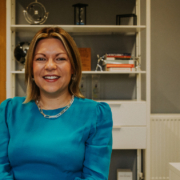
CLM Director Laura Wilson featured in the February 2025 issue of Land & Business magazine, talking about how, with the help of those around her, she set up CLM and developed it into the thriving rural business it is today.